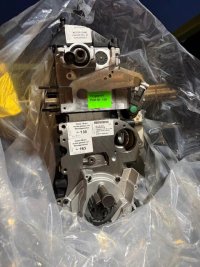
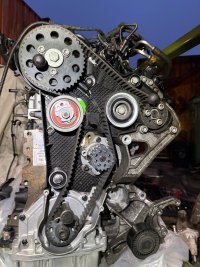
Sorry to hear about your troubles. Despite what many people think—and speaking as someone who has just had to fork out for a new engine the CFCA engines are generally very reliable.(if EGR deleted early on and serviced regularly)
Before jumping to conclusions, I’d strongly suggest having yours properly checked first. I’ve personally not heard of the CFCA bottom end failing, so it’s worth ruling out other causes.
If I were in your shoes, this is exactly what I would do:
Step-by-step checks
1. Drain the oil and remove the oil filter
Check for metal particles.
- If there are metal bits → the engine is done (see options below).
2. If the oil and filter look clean, carry out a compression test
- If compression is low → engine is done (see options below).
3. Check for fault codes
Could this be fuel- or injector-related rather than mechanical? Faulty injectors can often sound like a knocking bottom end.
If a new engine is required, your options are:
A) New crate engine
A brand-new crate engine (including EGR, injectors, and glow plugs) costs around
£5,000.
You should budget
another £1,000 for:
- Timing belt kit
- Accessory pulleys and belts
- Gaskets
- Water pump
- Exhaust clamps
- Coolant
- Brake fluid
- PAS fluid
- Slave cylinder
- Coolant flange and thermostat
All of these make sense to replace while the engine is out. Many are known weak points, and doing them now will give you
years of trouble-free motoring.
I personally used a trusted friend of mine, a highly experienced mobile mechanic who’s swapped more engines than I’ve had hot dinners. He:
- Removed the engine
- Transferred all ancillaries
- Cleaned everything that needed attention (e.g. intake manifold)
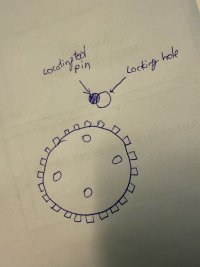
- Fitted the timing belt kit mm-perfect (this matters)
- Reinstalled the engine
- Primed the fuel system
- Bled everything correctly
- Refitted the entire front end without damaging any bodywork
Don’t expect this to be a 24-hour marathon job. It can take up to a week, as he may have other commitments. That said, if you’re on a budget and depending on your location, this could be a very good option. Budget around £1k?
B) Specialist companies (e.g. Restoruss or Darkside Developments)
I’m not certain on the final figure, but I’d expect it to be
around £12,500, give or take.
C) Engine rebuild
In my opinion, this is
not an option.
A rebuild costs almost as much as a new engine, yet you:
- Have no history of the unit
- No real control over build quality or tolerances
- No guarantee on how well the work was carried out
- And you’re left hoping it wasn’t a “Friday afternoon Mr Siliconator job
For every successful rebuild, there are ten others listening to their mates say:
"Buy cheap, buy twice"- The only difference is, deep down, you know it wasn't cheap but definitely going to be twice.
I truly hope its going to be a cheap fix.
if its an injector, i got 4 good ones from my old engine.
if you are after a rev D egr, i got an brand new vw one.
if you are after a good complete bottom end, i got this too, undamaged, ready to be slapped on.. please don't entertain griding your crank and oversized bearings. Tolerances are tight, quality control is key.
Please keep us posted and fire away any questions
Alex